-
24HR CENTRAL RESERVATIONS
0861 010 347

THE BIRD WHISPERER OF FINFOOT
by Chelsey Hale
Tracking the adventures of an unsung conservation hero
If there’s one person who can identify a bird by song, silhouette, or even the shadow it casts, it’s Sarel van der Westhuizen, Custodian of Finfoot Lake Reserve and renowned birding expert. Known by locals as ‘the bird whisperer’, Sarel has spent decades decoding the language of feathers, flight paths, and calls.
At Finfoot, a 3,500-hectare wilderness wonderland in the Greater Pilanesberg, his guided outings remain highly sought-after by both novice birders and seasoned twitchers actively working their way through their life lists.
“We’ve got 307 indigenous species swooping and flittering across the reserve,” he says. “From the flashy Violet-eared Waxbill to the busy little Grey-backed Camaroptera, there are plenty of birdy matters to go off on a harangue about.”
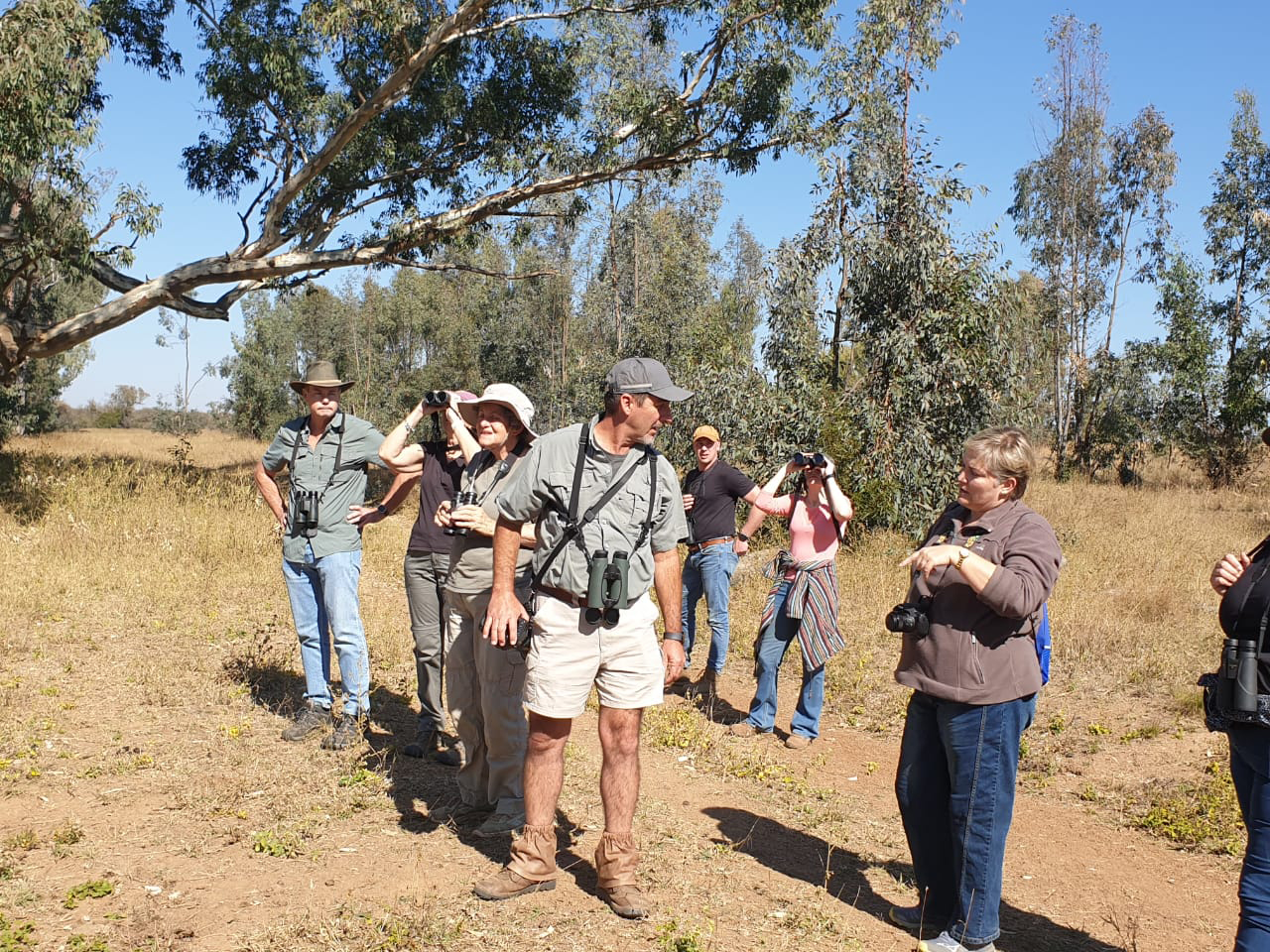
Sarel hosting the BirdLife Northern Gauteng club.
He is yet to reveal his favourite species, but when asked to consider a bird that might represent us as South Africans, Sarel mentions a surprising contender: the Marabou Stork.
“Yes, South Africa’s national bird, the elegant Blue Crane, is a proud and symbolic choice as our emblem of pride, but there’s just something about the Marabou Stork that goes beyond the way it looks,” he adds.
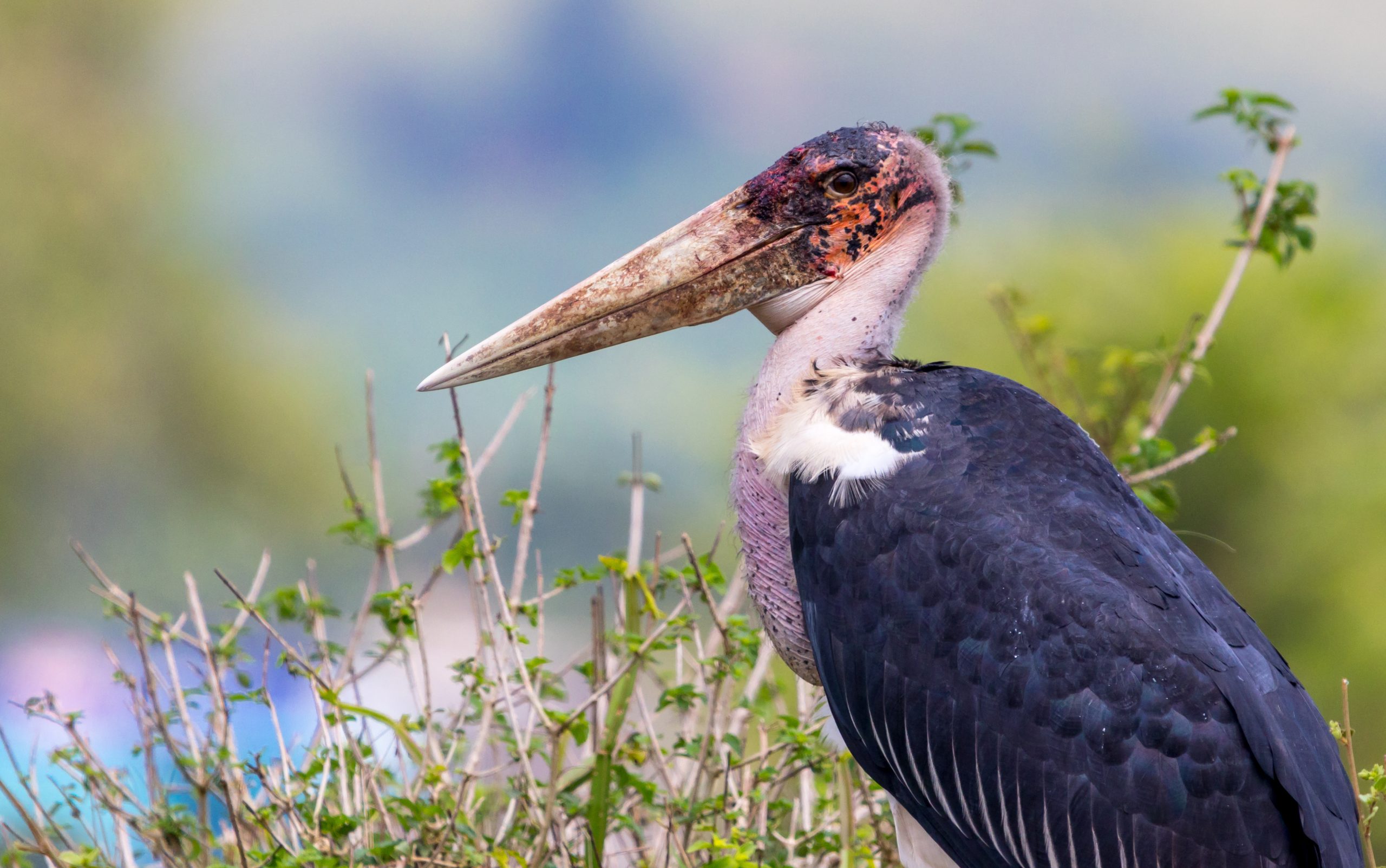
Unexpectedly iconic – the Marabou Stork, Sarel’s surprising symbol of South Africa.
Far from beautiful and not even indigenous to South Africa, this scaly-headed scavenger is one few would want to identify with, and yet, Sarel sees something deeper. “They’re bald, broody, and tough as nails. They prevent the spread of disease, protect ecosystems from contamination, and help maintain a delicate environmental balance. Their adaptability and usefulness make them oddly admirable.”
For Sarel, the Marabou is misjudged, but endlessly resilient… a sentiment echoing his personal mission to safeguard Finfoot, often with limited resources. With 23 years of experience as a game ranger and having called the reserve home since 2016, Sarel has been instrumental in transforming it into a thriving wildlife sanctuary, despite its location within a sprawling farming community where human-wildlife conflict remains a constant challenge.
“Choosing conservation as a career means preparing to be tested in every way imaginable,” he explains. “It’s a tough path that constantly pushes your resilience and stretches the limits of your hope.”
One of Sarel and Finfoot’s current projects is their partnership with the Endangered Wildlife Trust (EWT) via ‘The Bushcats’, a Dream Hotels & Resorts collective of bushveld-based properties including Olifants River Lodge, Mjejane Bush Camp, Jackalberry Ridge, and Burchell’s Bush Lodge.
“As part of DHR’s official non-profit entity, Touching Dreams, the EWT is our national partner and our selected Bushcats beneficiary,” explains Brent Dickson, Director of Dream Hotels & Resorts. “Our current focus is their Birds of Prey: Eye in the Sky project, which aims to protect African vulture populations and the ecosystems they support.”
Like the Marabou, Sarel highlights how vultures act as nature’s clean-up crew, preventing the spread of harmful bacteria and disease. “By supporting this project, we’re helping to safeguard a critically endangered species, while contributing to a healthier, more balanced future for the environment,” he adds.
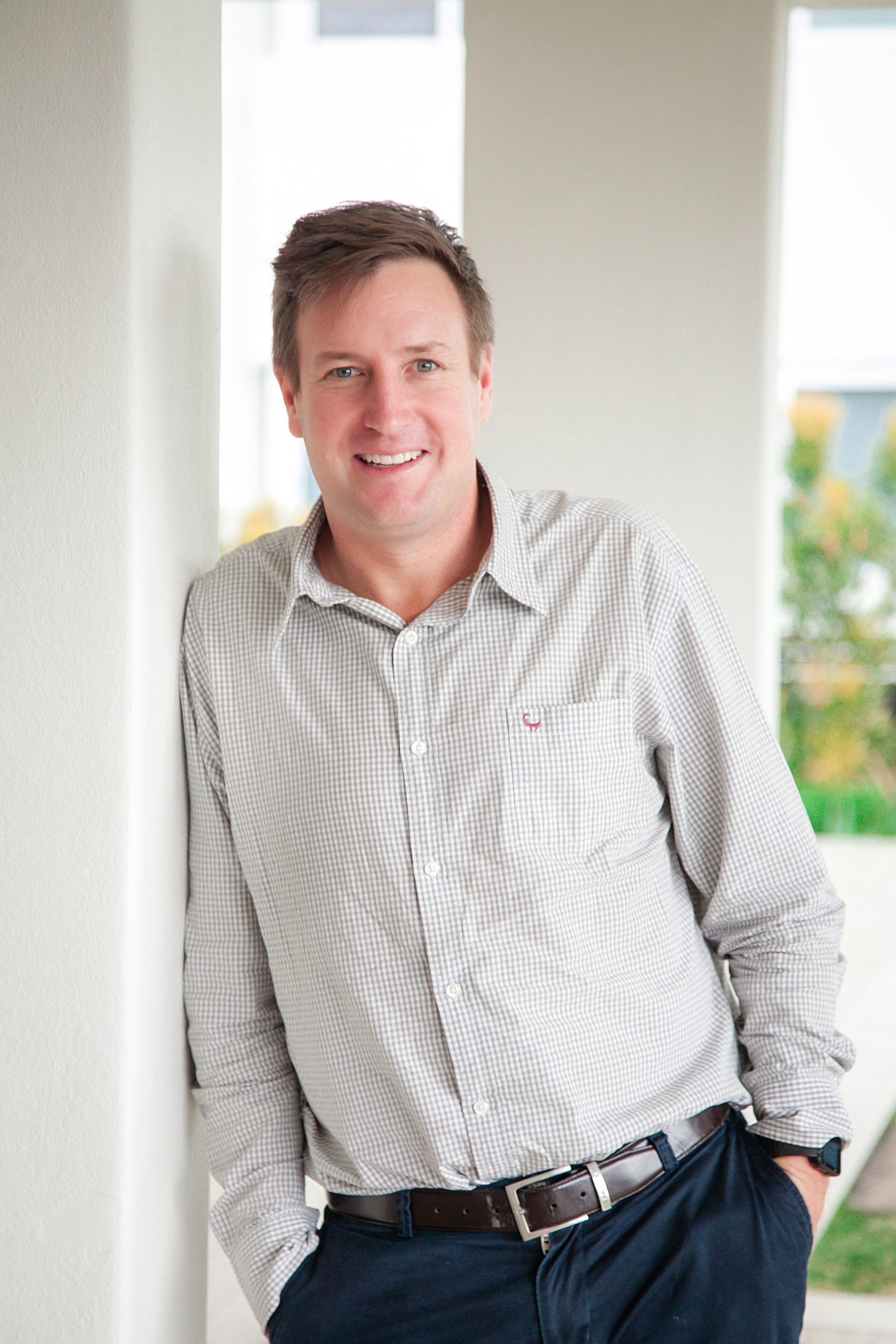
Brent Dickson, Director of Dream Hotels & Resorts.
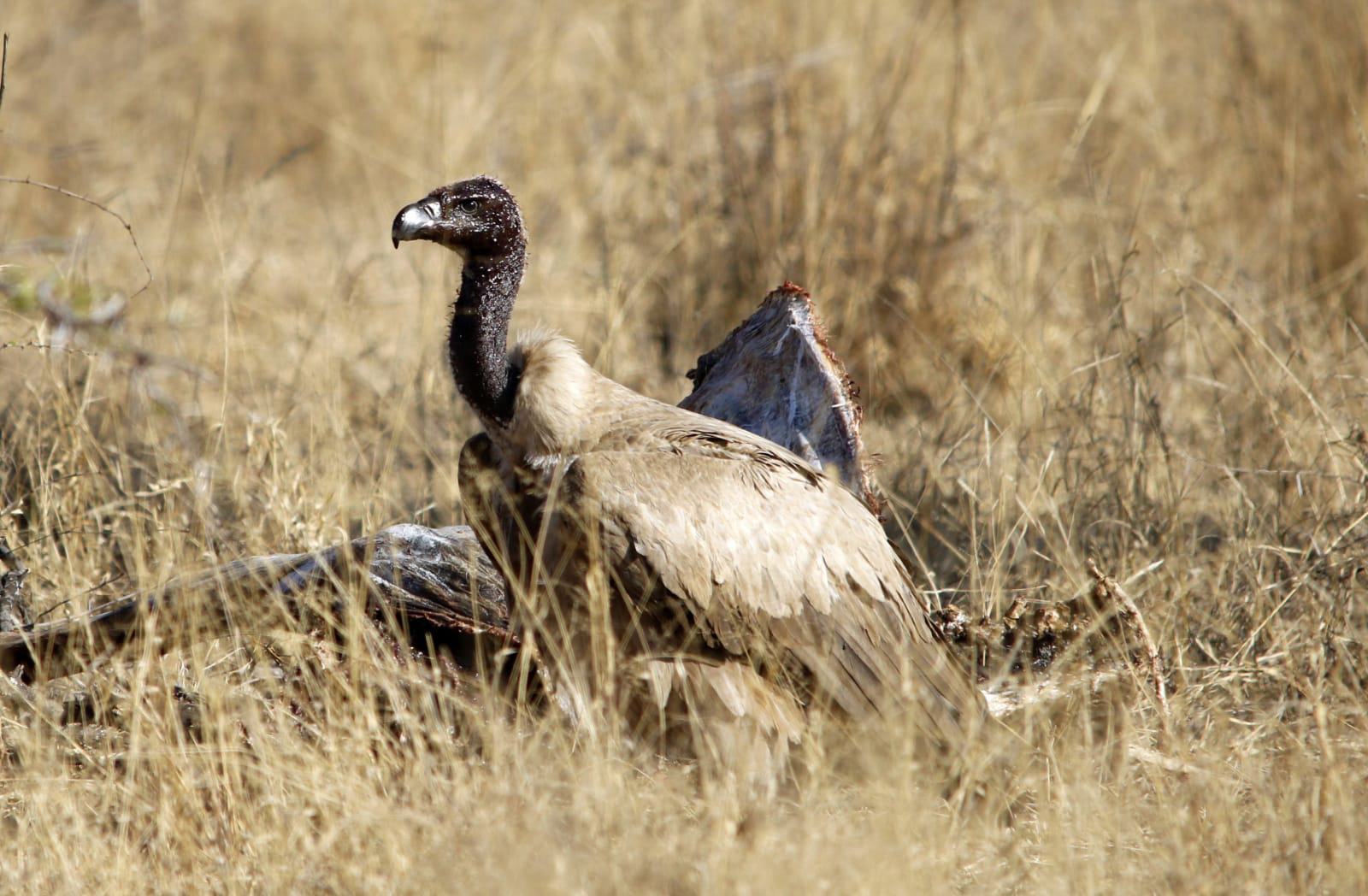
Vultures are nature’s clean-up crew, guarding ecosystems from disease.
Despite his reputation as a bird whisperer, Sarel’s next big adventure at Finfoot in 2025 wasn’t about watching the skies, but about keeping a close eye on the water below.
As of June 2025, the invasive hyacinth had smothered nearly 100% of the nearby Vaalkop Dam. He describes it starkly: “Hartbeespoort Dam on steroids.” Although the Vaalkop is only half the size of Hartbeespoort and lesser known, its importance is far greater, serving as the primary source of potable, agricultural, and industrial water for the North West.
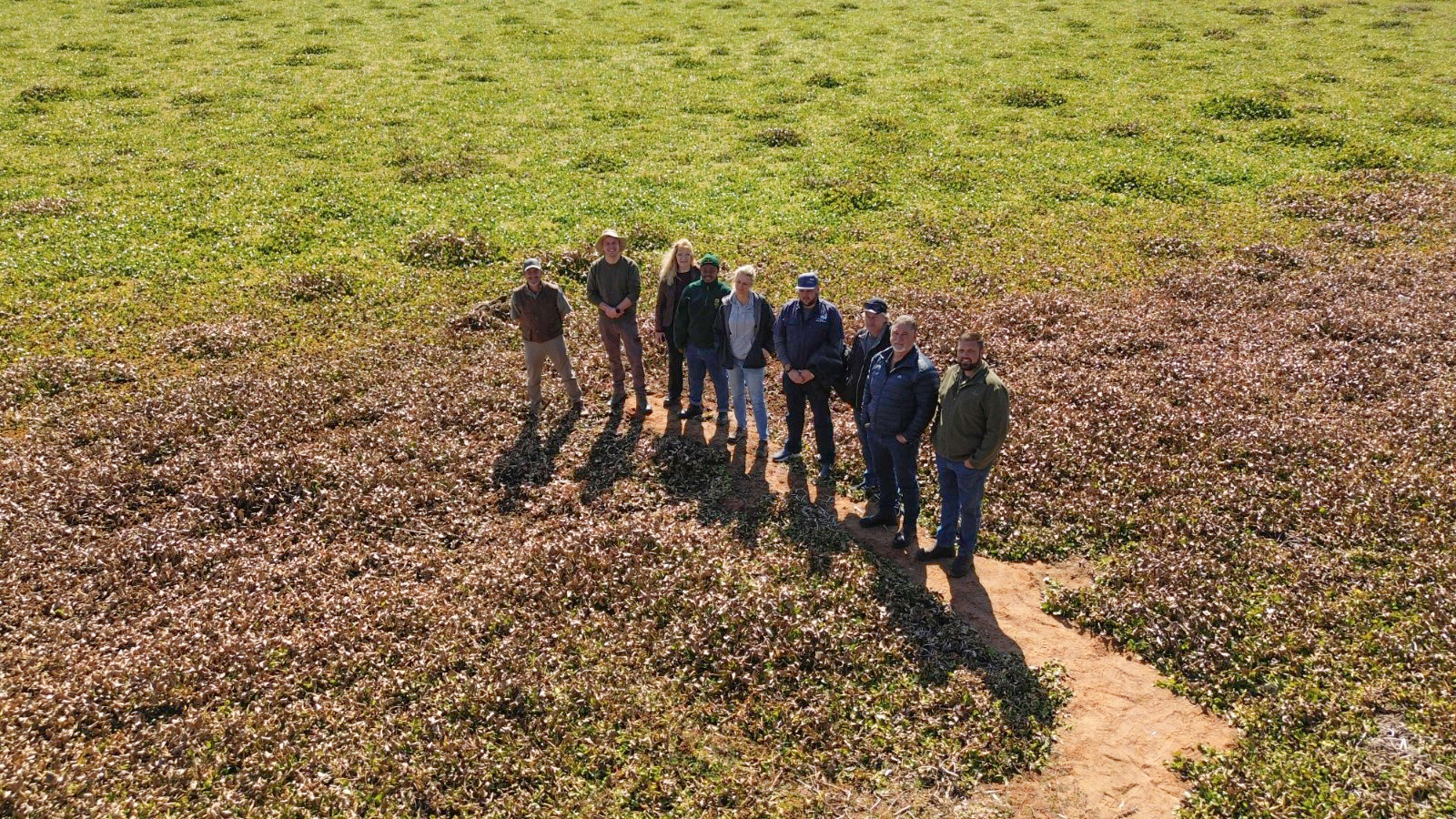
The invasive hyacinth that smothered nearly 100% of the nearby Vaalkop Dam.
“These water weeds thrive in nutrient-rich water and have flourished due to poorly treated wastewater from inlets into our dam,” Sarel explains. “About 70% of the Vaalkop’s water derives from a canal from Roodekoppies Dam, which is fed by Hartbeespoort.”
While the hyacinth invasion isn’t new to the Vaalkop, it had remained somewhat manageable since 2017 until the rains arrived in force in 2025. “We got way more rain than expected in the first six months,” says Sarel. “In January this year, the dam levels were down to 25%. By April, it was overflowing. We broke records! The most rainfall and the most hyacinth! We had 50 to 100-metre islands coming over the dam wall. In just five months, the weeds spread from 100 hectares to over 1,000!”
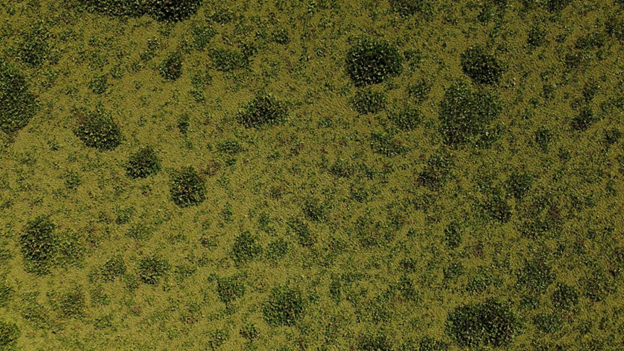
Hyacinth and Common Salvinia coverage.
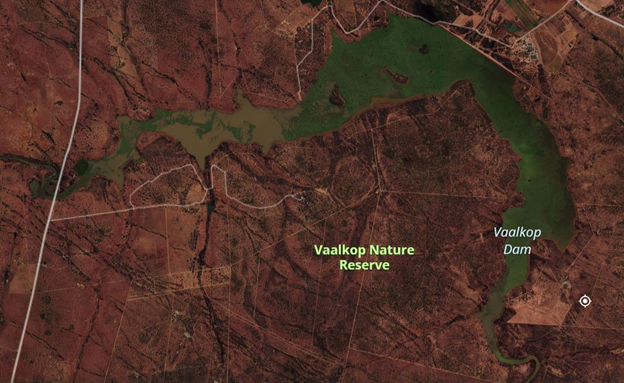
Aerial view of the coverage of the Vaalkop Dam.
And the impact goes beyond the surface. “If the problem continues, not even creatures like the Marabou would choose to have a place here. These weeds don’t just choke the dam and affect water quality for consumption. They choke biodiversity, which in turn affects tourism and local livelihoods.”
To tackle the burgeoning crisis, the Vaalkop Dam Alien Vegetation Action Group (VDVAG), comprising Finfoot, and neighbouring Bushwillow Estate and Mziki Nature Reserve, have reawakened the call for urgent advocacy and a long-term solution to the hyacinth and salvinia crisis.
“We’re currently waiting on quotes to get machines extracting what’s already there, but ultimately we need to get plans underway to construct additional rearing tunnels for the gogos to feed on the plants and prevent it from flowering.”
These ‘gogos’ Sarel refers to are Megamelus scutellaris, a tiny water hyacinth hopper, which acts as a natural biocontrol agent. “They were first introduced to us in 2020 when we partnered with the Centre for Biological Control (CBC) at Rhodes University,” Sarel adds.
For the release of the Megamelus, three rearing stations were established at the Vaalkop. However, without enough local stakeholders to maintain and scale these stations, the effort fell short in managing and reducing the spread this time around.
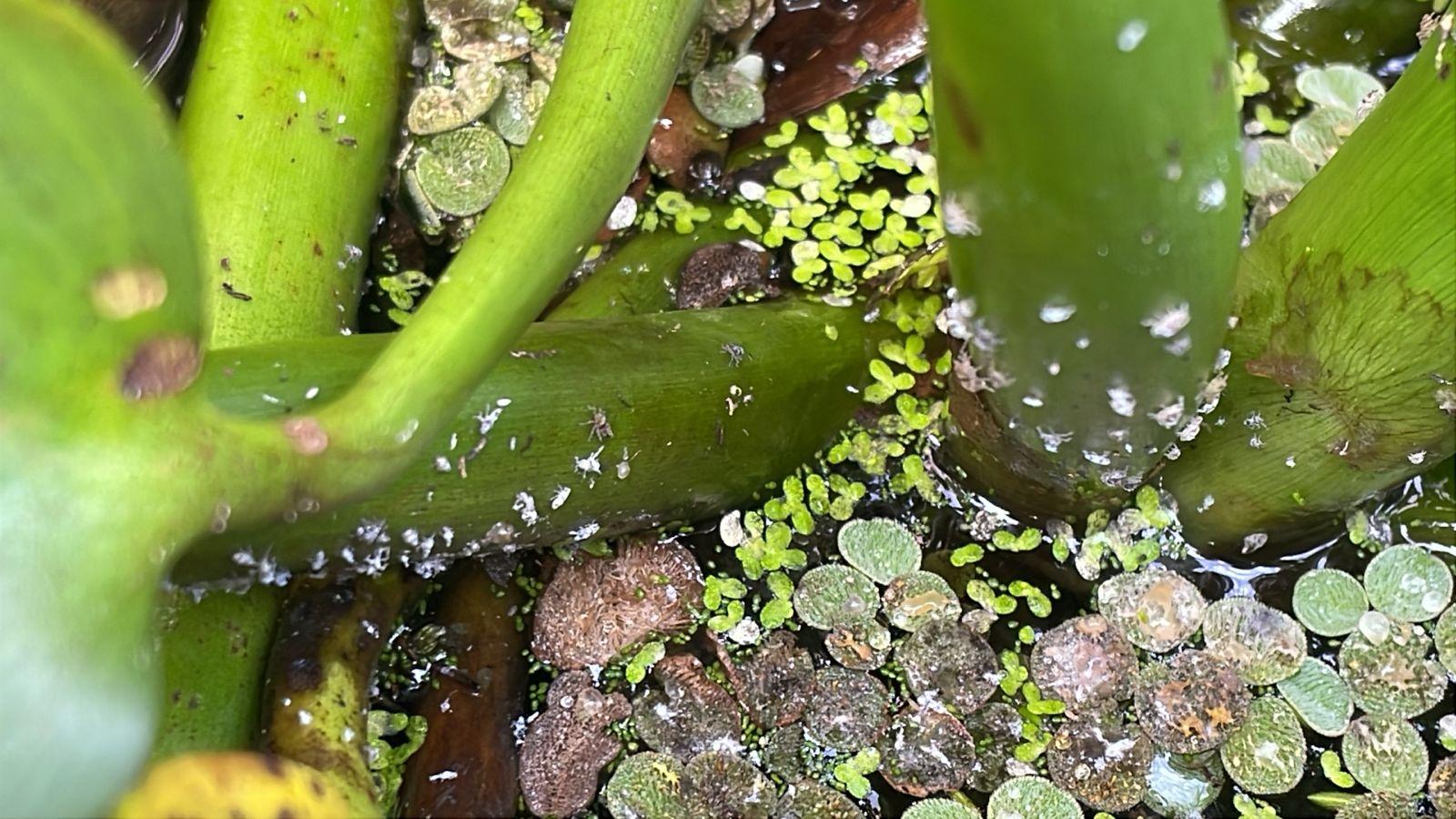
Megamelus scutellaris, a tiny water hyacinth hopper.
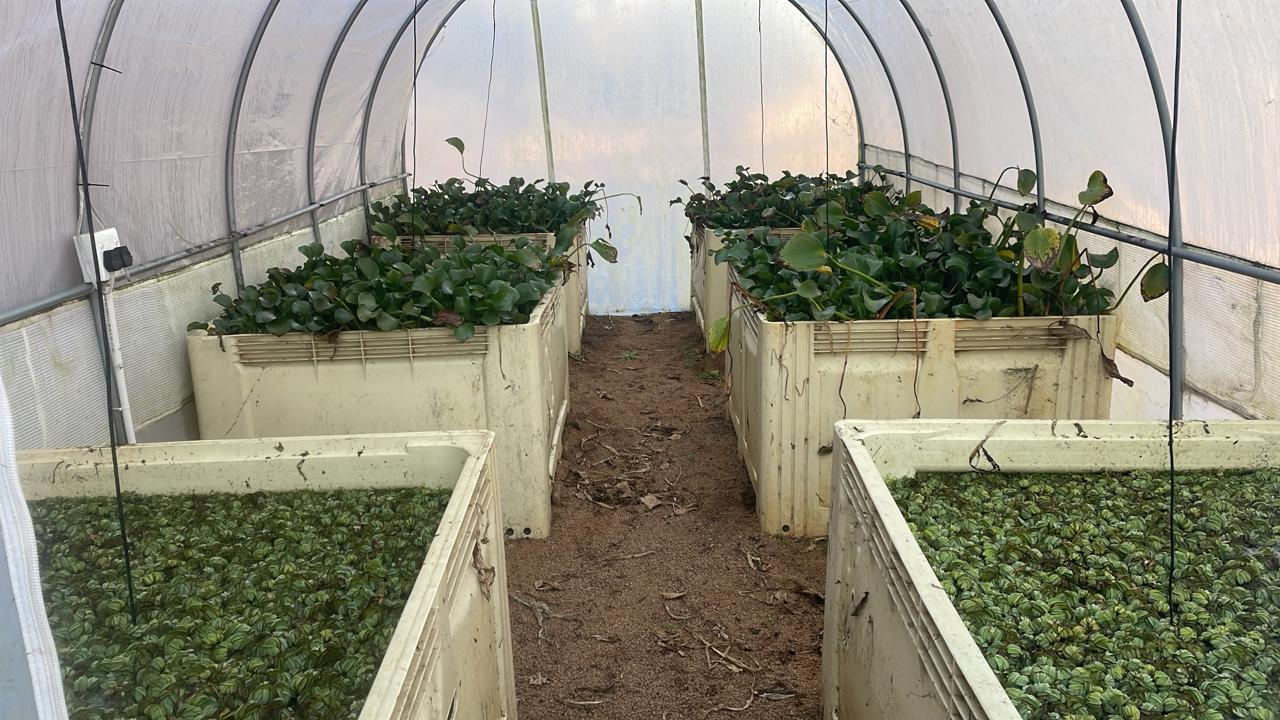
A close-up of the Megamelus scutellaris.
“Sarel has been integral to managing the hyacinth and salvinia issue,” says Brent. “But this crisis is bigger than one man or one lodge. He knows this environment intimately, but it will take collective action to fix it, beyond the work of the Action Group down on the ground.”
On 24 May 2025, a high-level meeting was held at Bushwillow Estate, bringing together the Department of Water and Sanitation, Magalies Water, the CBC, and several local stakeholders. Together, they’ve committed to an integrated management plan for the system, one that requires significant funding and long-term collaboration.
“Progress is never fast or permanent, and will always be threatened. It has taken time, but we’re finally starting to see movement,” adds Brent.He notes that FEDHASA, South Africa’s trade association for the hospitality industry, has visited Finfoot to assess the situation while proactive individuals within Dream Hotels & Resorts continue to raise awareness and build momentum around this urgent issue.
“Touching Dreams, our registered non-profit foundation, has made a R20,000 contribution to help fund the bug tunnels,” he adds.
On 04 July 2025, a follow-up meeting took place between the Rustenburg Municipality, the Deputy Minister of Water and Sanitation, the Department of Forestry, Fisheries and the Environment (DFFE), and the CBC to establish scalable solutions with biological control identified as top priority.
“We’re not waiting to be rescued,” says Brent. “We’re bringing more players to the table from both the public and private sectors, sounding the alarm, and pushing for coordinated, science-based action and a long-term solution. This is not simply a Finfoot issue.”
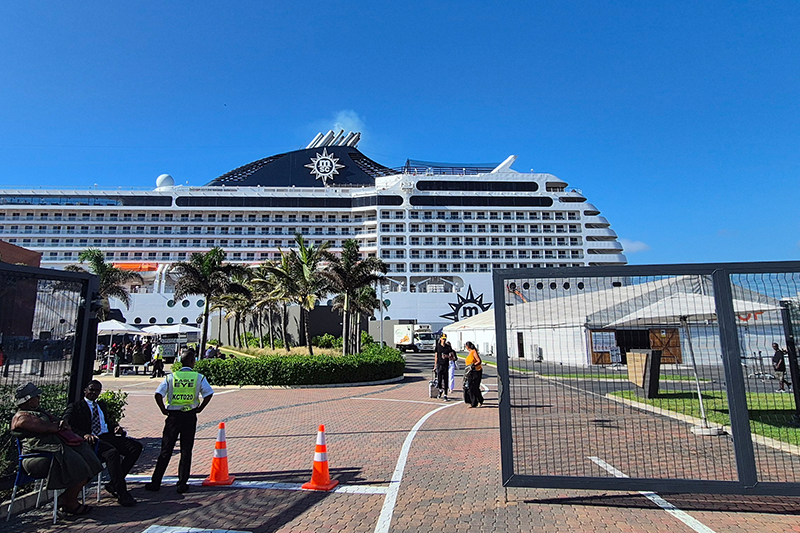
MSC Musica that Sarel set sail on in January 2025.
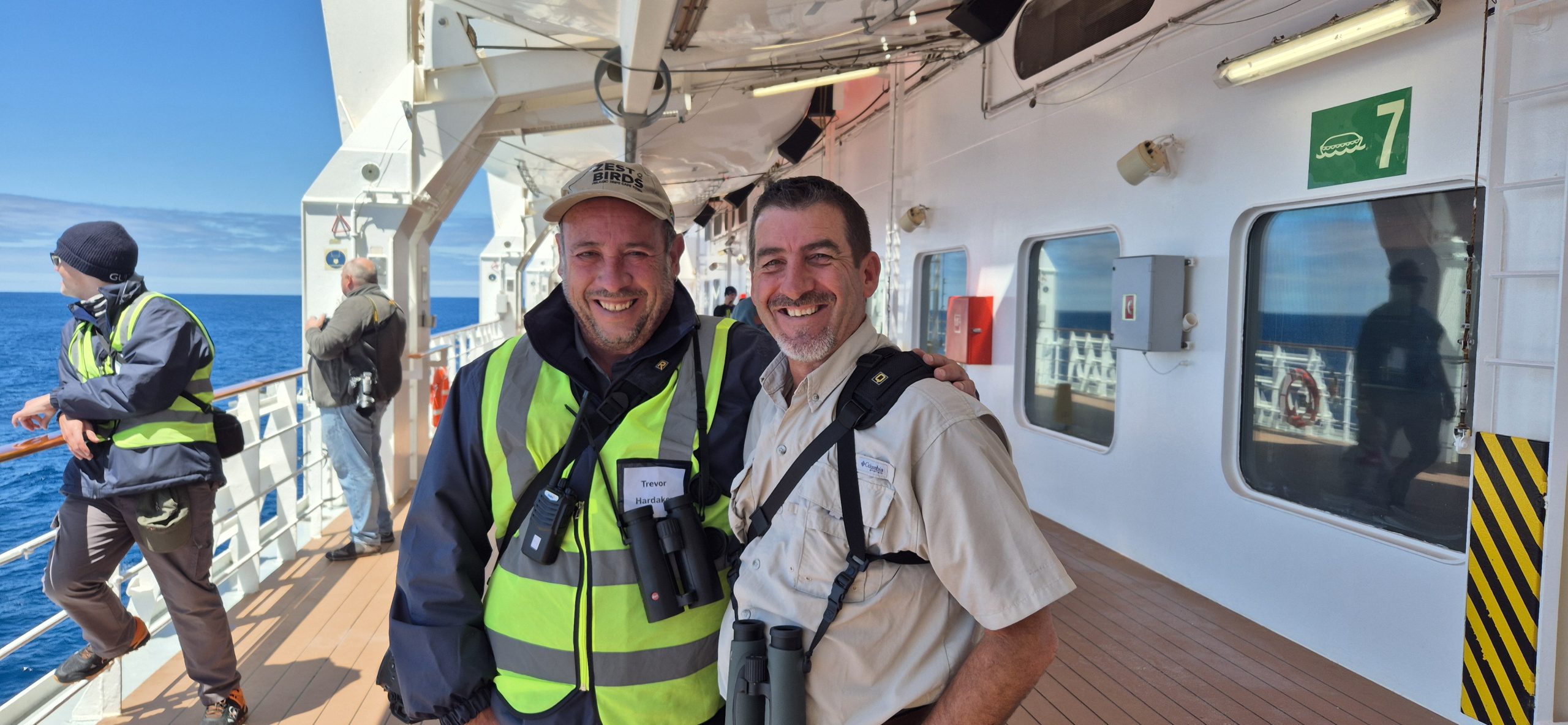
Sarel with Trevor Hardaker, a leading birder in South Africa.
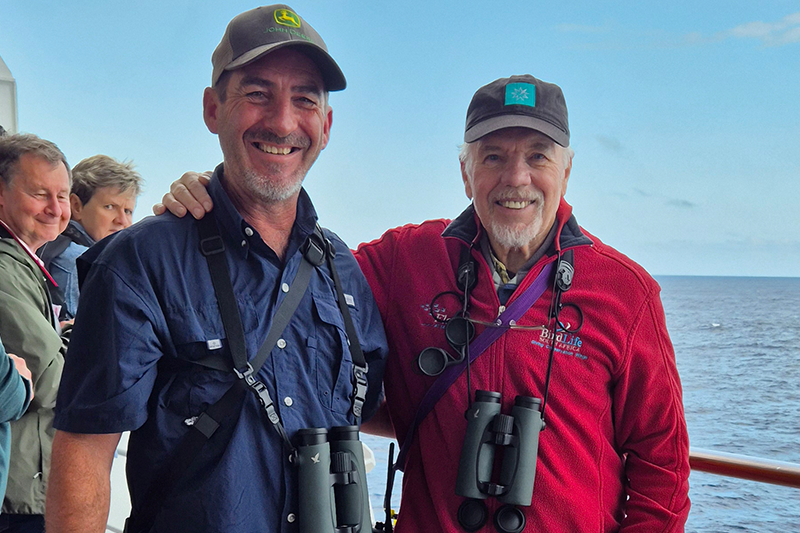
Sarel with Peter Harrison, the world’s leading sea bird expert.
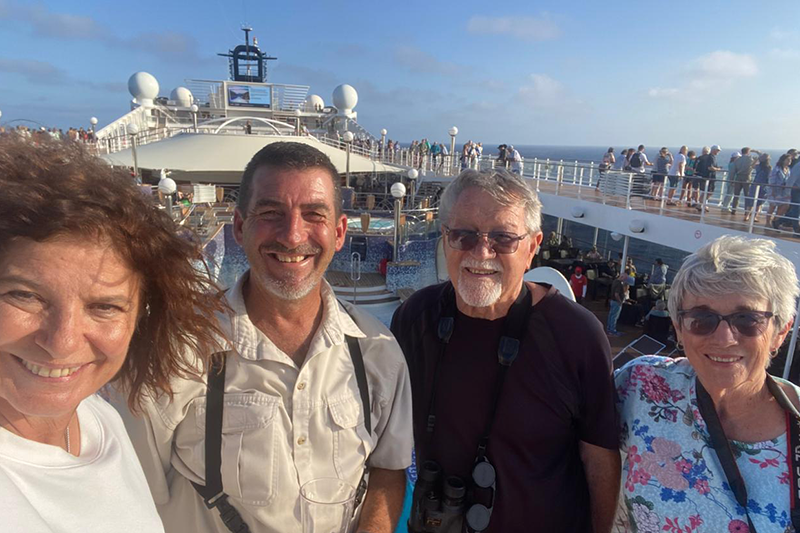
Sarel with some members from BirdLife Rustenburg.
Despite the ongoing crisis at Vaalkop Dam, plans are still underway to launch an exciting new initiative: a friendly birding challenge across three Dream Hotels & Resorts properties: Finfoot, Nibela Lake Lodge, and Little Switzerland Resort.
The concept is simple yet impactful: engage both local and international birders while highlighting the rich biodiversity and conservation value of each destination. The financial model is equally straightforward with costs will be recovered through a portion of accommodation fees, with proceeds supporting Touching Dreams.
To gauge international interest in the idea, Sarel set sail aboard the MSC Musica in January 2025, joining the second Flock to Marion voyage organised by BirdLife South Africa. The cruise departed from Durban Harbour on 24 January with over 1,900 passionate birders on board (roughly 80% of them international).
“The MSC crew didn’t quite know what to make of us,” Sarel adds. “They’re used to casino crowds and partygoers, now suddenly, 1,900 people obsessed with birds and not much else!”
Compared to the 2021 voyage, which attracted mostly local birding clubs, this edition gave Sarel a much wider audience to float the idea.
“I just started chatting to people. Nothing formal,” he says. “I wanted to see if they’d be open to travelling inland to tick off a few more species… if you’re not a birder, here’s something to know: birders love their lists. Would a well-run competition with a conservation twist interest them? No doubt, they were keen. Keen as honeyguides on a beehive. Now it’s just about making it happen.”
“We’re aiming to launch the competition in the coming year with Swarovski Optik as a partner,” adds Brent. “But right now, our immediate focus is tackling the hyacinth crisis at Vaalkop Dam. It’s not something our resident bird whisperer can solve on his own.”